The Brain Rewrites the Story: How Experimental Fiction Turns Memory's Failures Into Its Greatest Strengths
There is a particular unease that settles over a reader who arrives at chapter eleven of a novel and realizes, with slow certainty, that the event described in chapter three could not have happened the way it was told. The dates are wrong. The room has changed color. The woman who was described as absent was, apparently, standing in the doorway all along. The reader pauses, flips back, reads again — and discovers that both versions are, in some sense, true. Or neither. Or that the distinction no longer seems to matter in the way it once did.
This is not accident. This is architecture.
A growing cohort of experimental novelists, working at the intersection of literary craft and cognitive science, has moved beyond the familiar trope of the unreliable narrator as a device for dramatic irony. They are doing something considerably more ambitious: they are replicating, at the structural level of the text itself, the precise mechanisms by which human memory misfires. The result is fiction that does not merely describe psychological experience — it induces it.
What the Neuroscience Actually Says
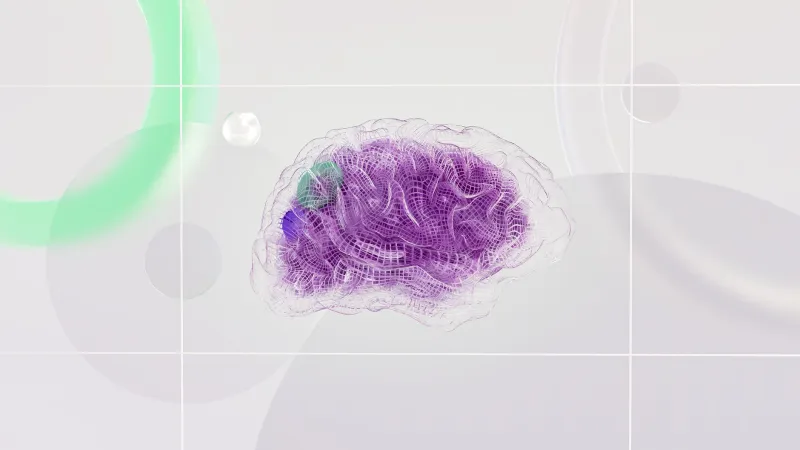
To understand what these writers are doing, it helps to understand what memory researchers have spent decades demonstrating: that human recollection is not retrieval but reconstruction. Every time a person recalls an event, the brain reassembles that event from fragmentary traces, filling gaps with inference, expectation, and suggestion. The neuroscientist Elizabeth Loftus, whose landmark studies on eyewitness testimony reshaped both legal practice and psychological theory, showed that subjects could be induced to remember events that never occurred — a broken headlight, a yield sign that was actually a stop sign, even entire childhood experiences that were fabricated by researchers. Memory, it turns out, is less like a video recording and more like a story a committee tells itself, revised at every retelling.
Experimental fiction has always been drawn to the unstable narrator. But the current wave of writers is moving past mere narration into something more structurally radical: they are building novels whose architecture performs cognitive distortion rather than simply reporting it.
Contradiction as Method
One of the most effective tools in this approach is deliberate self-contradiction across chapters — not as an error, and not as a twist, but as a sustained formal strategy. When a novel presents two incompatible versions of the same scene without resolving the discrepancy, it forces the reader into a position that mirrors the experience of a person whose own memories have become untrustworthy. The reader cannot appeal to the text as an authority because the text is the source of the confusion.
This is a profoundly different effect from a traditional twist ending, which resolves ambiguity and delivers the satisfaction of retrospective clarity. The contradictory novel refuses that satisfaction. It holds open the wound. And in doing so, it replicates the phenomenology of trauma, grief, or dissociation — states in which the mind's normal mechanism for establishing a coherent personal history breaks down entirely.
The reader, denied resolution, begins to do what the brain always does under such conditions: confabulate. They start filling gaps with their own inferences, misremembering earlier passages to fit later revelations, constructing a version of the story that feels consistent even when the text does not support it. The novel, in other words, has successfully colonized the reader's own cognitive processes.
Nested Timelines and the Collapse of Sequence
Another structural technique involves the deliberate entanglement of temporal layers — not the conventional flashback, which maintains a clear hierarchy between present and past, but a genuine collapse of sequence in which the reader cannot determine which events precede which. When a novel presents three timelines that bleed into one another, each narrated with equal authority and equal sensory vividness, the brain's natural tendency to impose chronological order becomes a liability. The reader reaches for sequence and finds none. They begin to experience something that resembles the temporal disorientation reported by subjects in sleep deprivation studies, or by individuals in the early stages of certain neurological conditions — a sense that time is not a river but a room, and that all its furniture is in the wrong place.
This is not chaos for its own sake. Writers who deploy nested timelines with genuine craft use them to generate a specific emotional truth: the experience of living with an unresolved past. For a character — and, crucially, for a reader — who cannot locate where the wound occurred in time, healing becomes structurally impossible. The form enacts the content. The novel becomes the condition it describes.
The False Detail and the Complicit Reader
Perhaps the most sophisticated technique in this emerging toolkit is what might be called the planted absence — the detail the reader remembers reading that was never, in fact, on the page. Skilled experimental writers understand that suggestion, repetition, and contextual priming can cause readers to construct memories of text that does not exist. A character's eye color, mentioned once in passing, becomes fixed in the reader's mind as a recurring motif. A room described in vague terms becomes, in the reader's memory, specific and furnished. When the novel later contradicts this internally generated detail — referencing the character's different eye color, or revealing the room to be entirely bare — the reader experiences a jolt of uncanny recognition: they were the unreliable narrator all along.
This technique implicates the reader in the novel's instability in a way that no amount of first-person hedging can achieve. The unreliability is not a property of the character on the page; it is a property of the act of reading itself.
Why This Produces a Deeper Truth
The obvious objection to all of this is that fiction built on cognitive manipulation sacrifices clarity for effect — that it is, ultimately, a sophisticated parlor trick. This objection misunderstands what truth experimental fiction of this kind is pursuing.
Straightforward realism, however accomplished, presents experience as something that can be reliably reported: events occur, are perceived, are remembered, and are recounted. But this model of experience is itself a fiction — and not a particularly convincing one, for anyone who has tried to reconstruct the sequence of a difficult year, or compared their memory of a shared event with someone else's. The realist novel's implicit promise of coherent, recoverable experience is a consolation that comes at the cost of psychological honesty.
Fiction that builds its architecture from the actual materials of human cognition — contradiction, temporal blur, confabulation, the gap between what happened and what the mind makes of what happened — is not less true than realism. It is more true, in the way that a topographic map is more true than a flat one: harder to read, more demanding of the traveler, but finally a more accurate account of the terrain.
The Immersion That Realism Cannot Reach
Readers who submit to this kind of fiction describe an experience qualitatively different from conventional narrative immersion. It is not the pleasurable transport of being lost in a well-told story. It is something more unsettling and more lasting — a sense that the novel has not merely occupied their attention but altered something in the way they are processing experience. They emerge from the book uncertain, in a productive way, about the reliability of their own recall.
This is, ultimately, what the most ambitious experimental fiction has always been reaching for: not to represent consciousness but to become it, however briefly. The brain, it turns out, is not an obstacle to that ambition. It is the material.