The Eloquence of Absence: How Experimental Writers Turn Empty Space Into Psychological Pressure
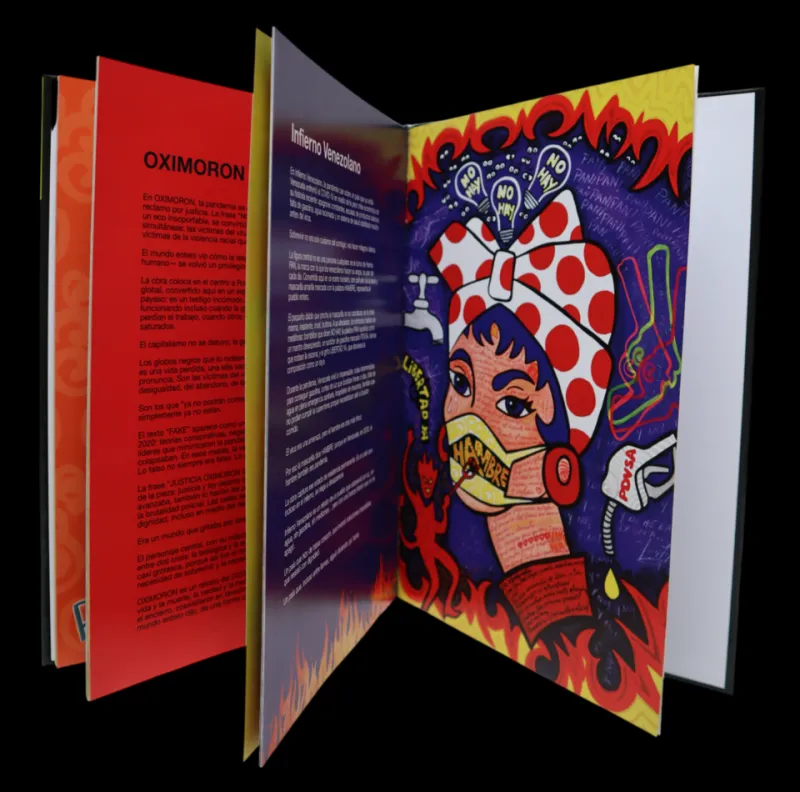
Photo: HonysTorresArt, CC BY-SA 4.0, via Wikimedia Commons
There is a particular kind of unease that descends when a sentence stops before it should. Not a clean, grammatical stop—a full stop at the end of a fully realized thought—but a truncation. A withdrawal. The literary equivalent of a door closing in another room. Contemporary experimental fiction has become increasingly fluent in this language of omission, and the most adventurous readers are beginning to understand that what a narrative withholds is frequently more immersive than what it delivers.
This is not minimalism for its own sake. The negative space employed by writers such as Ocean Vuong, Deborah Eisenberg, Jenny Offill, and László Krasznahorkai—each working in radically different registers—functions as a kind of psychological architecture. The gaps are load-bearing. They hold the structure up precisely because the reader is compelled to fill them.
The Mechanics of the Unsaid
Cognitive science offers a useful framework here. The human brain is, at its most fundamental level, a prediction machine. It continuously generates expectations about what should come next—in conversation, in visual perception, in narrative. When those expectations are met, the brain registers satisfaction and moves on. When they are violated or deliberately frustrated, something more interesting occurs: the brain intensifies its engagement, pouring additional interpretive resources into the gap.
Experimental writers exploit this mechanism with considerable sophistication. In Ocean Vuong's novel On Earth We're Briefly Gorgeous, the fragmented, epistolary structure—a letter from a son to a mother who cannot read—is not merely a formal conceit. Each white space on the page, each abrupt tonal shift, each digression that never fully resolves becomes a site of reader participation. The text does not explain its own grief; it enacts it. The silence between passages asks the reader to supply the emotional connective tissue, and in doing so, makes the reader complicit in the work's meaning.
Deborah Eisenberg operates differently but toward a similar end. Her short fiction—dense, elliptical, frequently refusing the consolation of resolution—leaves entire psychological histories offstage. Characters reference events the reader never witnesses. Conversations circle without landing. The effect is less like reading a story and more like overhearing one through inadequate walls: you catch enough to be unsettled, never enough to feel secure.
Fragmentation as a Mirror of Contemporary Attention
It would be too convenient—and somewhat reductive—to argue that experimental fragmentation is simply a formal response to the fractured attention patterns of digital life. And yet the parallel is difficult to ignore. The contemporary American reader arrives at a text already accustomed to discontinuity: the interrupted scroll, the half-watched video, the conversation conducted across three simultaneous platforms. Narrative linearity, in this context, can feel not like clarity but like condescension.
Experimental writers who embrace negative space are, in a sense, meeting readers where they already live. Jenny Offill's Dept. of Speculation and its successor Weather are constructed almost entirely from fragments—aphorisms, half-finished anecdotes, scientific observations, overheard remarks. There is no conventional chapter structure, no scene-building in the traditional sense. What holds the work together is the white space itself: the implied relationship between fragments that the reader must intuit. The books do not feel incomplete. They feel, paradoxically, more whole than conventional novels because the reader's imagination has been recruited as a co-author.
This is immersive storytelling of a specific and demanding variety. It does not pull you under through the momentum of plot or the seduction of a richly described world. It pulls you under through the cognitive labor it demands—and the strange intimacy that labor produces.
The Risk of Obscurity, and Why It's Worth Taking
There is, of course, a legitimate critique of this approach. Negative space, deployed carelessly, produces not intensity but mere confusion. The gap that invites interpretation must be distinguished from the gap that signals authorial evasion or technical failure. The difference lies in what surrounds the silence: the precision of the language on either side, the coherence of the emotional logic beneath the fragmented surface.
When Marilynne Robinson leaves the interior life of certain characters almost entirely unexplored in Housekeeping, the restraint feels earned because the novel's prose elsewhere achieves such extraordinary specificity. The silences are calibrated against the richness of what is present. The reader trusts that the omission is purposeful—and that trust deepens rather than diminishes engagement.
By contrast, fragmentation deployed without this structural integrity reads as affectation. The reader senses, correctly, that the gaps exist not to generate meaning but to simulate profundity. Experimental fiction's worst practitioners mistake incomprehensibility for depth. Its best understand that absence is only eloquent when something precise and true surrounds it.
Reading in the Negative
For readers willing to accept the demands that negative space places on them, the rewards are considerable. The psychological intensity generated by deliberate omission tends to persist beyond the reading experience in ways that more explicitly stated narratives do not. What you have had to work to understand, you remember with unusual vividness. What the text has refused to hand you, you carry with you—because, in a meaningful sense, you built it yourself.
This is perhaps the deepest argument for experimental literature's embrace of absence: it produces a form of immersion that is genuinely irreversible. A reader who has learned to inhabit the silence between words has not merely encountered a story. They have been altered by the act of completing it.