Archaeology of the Unfinished: How Experimental Writers Mine Abandoned Manuscripts for Living Art
There is a particular kind of literary courage required to walk back into a story you have already surrendered. Not to rescue it. Not to impose resolution upon its open wounds. But to stand inside its collapse and ask what the rubble is actually saying. A quiet but consequential movement within experimental fiction has made precisely this gesture its central artistic practice—and the results are among the most immersive, most psychologically demanding reading experiences available to American audiences today.
The premise sounds almost perverse: take what failed, what was abandoned, what was declared unsalvageable, and treat it not as raw material to be refined but as finished artifact to be excavated. The incompleteness, in this framework, is not a flaw awaiting correction. It is the text's most truthful feature.
The Archive as Wound
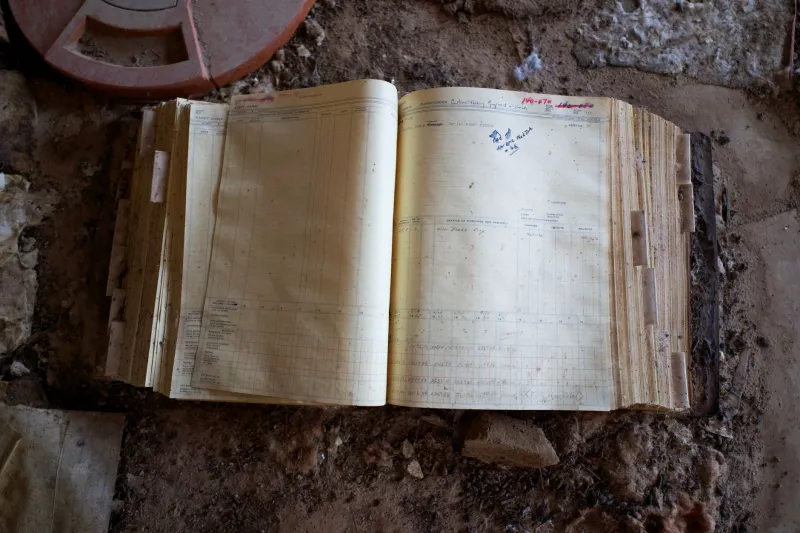
To understand this practice, it helps to consider what an abandoned manuscript actually is. It is not simply an unfinished book. It is a record of a writer's encounter with something they could not fully articulate—a shape of experience or consciousness that resisted the narrative forms available at the time of writing. The failure, in other words, is diagnostic. It marks the boundary of what language could accomplish under particular conditions, and that boundary is precisely where certain experimental writers now choose to build.
Vanessa Place has been among the most uncompromising practitioners of this approach. Her work frequently involves the reprocessing of existing texts—legal documents, found language, prior literary attempts—stripped of their original contexts and redeployed in ways that force readers to confront the violence embedded in ordinary discourse. When Place returns to textual debris, she is not interested in completion. She is interested in exposure: what does the failure of a text reveal about the cultural and linguistic systems that produced it? The ruins, in her hands, become evidence.
Bhanu Kapil operates from a different emotional register but with a similarly radical commitment to the fragment. Her book Ban en Banlieue emerged partly from a manuscript she destroyed—literally set on fire—and then reconstructed from memory and residue. The resulting work carries the texture of irreversible loss; it does not pretend to wholeness, and that refusal is what makes it so viscerally affecting. Readers do not simply observe Kapil's grief and formal disintegration. They are drawn into the experience of trying to hold something together that cannot be held. Immersion, here, is indistinguishable from mourning.
Why Ruins Generate More Than Blueprints
The conventional assumption in literary culture—particularly in the American publishing landscape, where finished product and market readiness dominate editorial conversation—is that a manuscript exists to become a book, and a book exists to be complete. The abandoned draft represents waste: creative energy that did not achieve its intended form. Experimental writers working in this mode reject that economy entirely.
What they recognize is that the abandoned narrative often contains precisely the excess that conventional literary form is designed to exclude. The places where a manuscript breaks down are frequently the places where the writer encountered something too large, too contradictory, or too formally unstable for the available containers. Rather than viewing these ruptures as problems, writers like Kapil and Place treat them as coordinates—markers pointing toward experiences and truths that demand new formal solutions.
This is not nostalgia for failure, nor is it the romanticization of incompleteness for its own sake. It is a rigorous claim about where meaning actually lives. The polished, completed narrative has by definition resolved its tensions, smoothed its contradictions, and delivered its reader to some form of closure. The ruin has not. And for a reader willing to enter it without the expectation of resolution, that unresolved state can produce an encounter with literature that is far more destabilizing—and far more honest—than anything a finished book typically offers.
The Ethics of Inhabiting Someone Else's Wreckage
The practice becomes considerably more complex when writers return not to their own abandoned work but to the discarded or incomplete texts of others. Here, the ethical terrain grows difficult in ways that deserve serious attention.
Some experimental authors have built entire projects around fragments left by writers who died before completion, or manuscripts that were suppressed, lost, or deliberately destroyed. The question of what license one has to inhabit another writer's ruins—to extract meaning from their private failures, to make art from their most unguarded moments of inadequacy—is not easily answered. The best practitioners of this approach tend to foreground that discomfort rather than suppress it. The ethical tension becomes part of the work's subject matter.
There is also the question of the original writer's intention. An abandoned manuscript is, almost by definition, a text its author chose not to release. To resurrect it, even in fragmentary or transformed form, involves a kind of trespass. Experimental writers who engage in this practice most responsibly tend to treat that trespass as visible rather than concealed—marking the violence of their own intervention, refusing to pretend that the act of excavation is neutral or costless.
What the Reader Is Asked to Do
Readers who encounter this work face demands that conventional fiction does not make. There is no narrative momentum to carry them forward, no plot engine generating forward pull. What there is instead is a kind of archaeological patience: the willingness to sit with fragments, to resist the urge to assemble them into false coherence, and to allow meaning to emerge laterally rather than sequentially.
This is, in the deepest sense, immersive reading—not because it creates a smooth, enveloping fictional world, but because it requires total cognitive and emotional presence. The reader cannot skim ruins. They must move through them carefully, attending to every absence, every break, every place where the text refuses to continue. The experience is closer to reading a landscape than reading a story.
For American readers accustomed to the satisfactions of narrative completion, this demands a genuine recalibration of expectation. What is being offered is not pleasure in the conventional sense but something more enduring: the sensation of having been genuinely inside a consciousness that was struggling, failing, and generating meaning in the very process of its failure.
The Productive Incompleteness
What experimental writers who work in ruins ultimately propose is a different theory of what literature is for. Not the delivery of experience in finished form, but the creation of conditions under which experience—unfinished, contradictory, irreducibly complex—can be genuinely shared.
The abandoned manuscript, in this light, is not a casualty of the literary process. It is one of its most honest products. And the writers who return to such texts are not engaged in salvage operations. They are making a philosophical argument about where truth tends to accumulate: not in the resolved, the polished, and the complete, but in the broken, the interrupted, and the persistently unfinished.
For readers willing to enter those spaces without a map, the rewards are considerable—and the immersion is total.