The Architecture of Nothing: How Avant-Garde Writers Are Building Stories Out of Blank Space
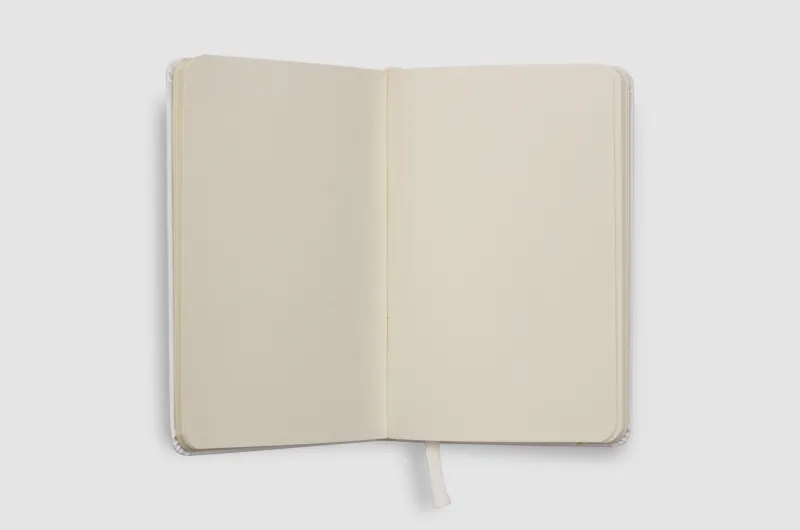
There is a moment, familiar to anyone who has wandered into genuinely challenging literature, when the eye travels down the page and lands not on words but on a field of white. The instinct is to assume something is missing—a printer's error, a design oversight, a gap that should have been filled. But in the hands of the most ambitious experimental writers working today, that instinct is precisely the point. The void is not an accident. It is the sentence.
The relationship between text and the space surrounding it has occupied poets and typographers for well over a century. Stéphane Mallarmé's Un Coup de Dés, published in 1897, scattered words across double-page spreads with a deliberateness that made the white expanses between phrases feel charged, even adversarial. George Oppen and the Objectivist poets of mid-twentieth-century America treated the line break as a unit of meaning unto itself. Yet contemporary experimental fiction has carried this inheritance into territory that is at once more psychologically precise and more formally radical than its predecessors dared to attempt.
Space as Pressure
The conventional understanding of white space in prose is utilitarian: paragraph breaks signal transitions; chapter endings offer rest; margins frame the text without contributing to it. What avant-garde novelists have discovered—or, more accurately, rediscovered and weaponized—is that these conventions carry enormous psychological weight. When a writer violates them with intention, the reader's nervous system registers the violation before the intellect can process it.
Consider what happens physiologically when a reader encounters a single, short sentence followed by half a page of white. The eye moves forward expecting continuation and finds none. There is a mild but genuine cognitive arrest. The brain, wired to pattern-complete, begins generating the content that the author has withheld. In this way, the blank space becomes generative rather than empty: it is a space the reader is consciously or unconsciously obligated to populate.
This is not a passive act of reception. It is co-authorship under duress.
Jenny Offill's Dept. of Speculation and its successor Weather have brought this technique to a wider American readership than most experimental works manage. Offill's fragmentary paragraphs, separated by deliberate voids, do not merely suggest the elliptical quality of thought—they structurally enact it. The white space between her sections functions as the unsaid: the grief too large to articulate, the marriage trouble that resists direct narration, the ambient dread of a world in crisis. Readers do not observe these states from the outside; they are required to cross the white expanse and arrive at meaning themselves.
The Blank Page as Dramatic Character
To speak of white space as a "character" is not mere metaphor. In the most rigorous experimental texts, negative space behaves with something approaching intention. It withholds. It accelerates. It mourns. It threatens.
Mark Z. Danielewski's House of Leaves—still perhaps the most architecturally audacious novel produced on American soil—uses spatial disorientation as a direct correlative to psychological collapse. Pages with a single line of text surrounded by vast white margins do not simply represent the narrator's isolation; they create it in the reader's body. The eye, accustomed to the density of conventional prose, experiences the sparseness as exposure. The room described in the text and the space of the page itself become uncomfortably equivalent.
This collapsing of the diegetic and the material is white space's most potent trick. When the physical page begins to feel like the psychological interior of the narrative, the reader loses the comfortable distance of spectatorship. The blankness pulls them under.
Strategic Silence and the Reader's Imagination
There is a long-standing debate in craft circles about the relative merits of what is shown versus what is withheld. Ernest Hemingway's iceberg theory—that the dignity of a story's movement depends on what the author leaves out—is perhaps the most cited formulation of this principle. But the iceberg theory imagines absence as subtraction: you remove material and the remaining text gains weight. What experimental writers are exploring is something more active. They are not simply removing material; they are making the removal visible, even monumental.
When Claudia Rankine structures sections of Citizen: An American Lyric so that images and white space carry equal narrative burden to the prose, she is not practicing restraint in the Hemingway sense. She is insisting that the reader pause inside the gap, that the gap itself constitute a form of testimony. The silence between her sentences is not the silence of something withheld. It is the silence of something that cannot be said within the conventions of continuous prose—a grief and a rage that require a different kind of container.
This distinction matters enormously for readers who wish to understand what experimental literature is attempting. It is not simply that these writers say less. It is that they have identified the space between saying as a medium with its own grammar.
Visual Composition and the Literary Page
The implications extend beyond line breaks and paragraph spacing into the broader visual composition of the literary page itself. A growing number of experimental novelists in the United States and abroad are working in explicit dialogue with visual art traditions—concrete poetry, artists' books, and graphic narrative—to reconceive what the page can do.
Authors such as Anne Carson, whose hybrid texts treat the white page as a field for both lyric fragments and dramatic silences, have demonstrated that prose does not require density to achieve intensity. Carson's Nox, a facsimile of a handmade book mourning her brother's death, uses the vast emptiness of its accordion-fold pages to make grief spatial. The reader does not read about the space grief creates; they move through it.
This spatialization of emotional experience represents one of experimental literature's most significant contributions to the broader culture of storytelling. At a moment when digital reading environments compress and accelerate text, when social media has trained attention toward the dense and the immediate, the deliberate blank page is an act of resistance and an act of invitation simultaneously.
What the Void Demands
Reading experimental fiction that uses white space as a primary instrument is not a passive undertaking. It requires a willingness to sit inside uncertainty, to resist the urge to skip forward to the next sentence, and to take seriously the possibility that the most important thing on a given page is what has not been placed there.
This is, at its core, an act of trust—trust in the author's intelligence and trust in one's own capacity to generate meaning in the absence of explicit instruction. For readers accustomed to fiction that guides and explains, that fills every silence with exposition, the encounter with strategic blankness can feel disorienting. It is supposed to.
The writers who use space most powerfully understand that immersion does not require saturation. Sometimes the deepest pull is not the weight of words but the gravity of what surrounds them—the white that holds the text up, presses inward from all sides, and waits for the reader's mind to complete what the author has only begun.