Lost on Purpose: The Case for Fiction That Refuses to Guide You
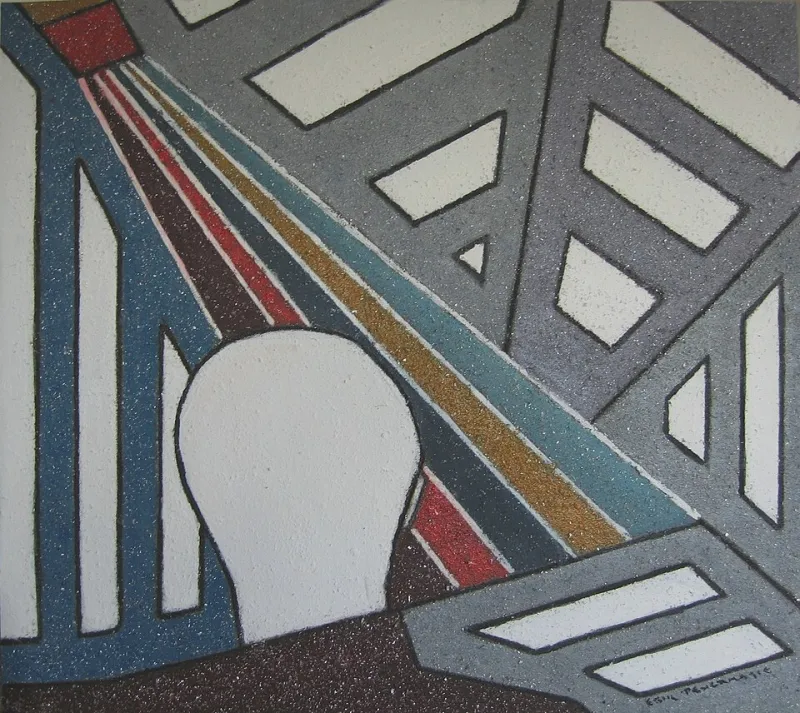
Photo: Erik Pevernagie .mw-parser-output .messagebox{margin:4px 0;width:auto;border-collapse:collapse;border:2px solid var(--border-color-progressive,#6485d1);background-color:var(--background-color-neutral-subtle,#fbfcff);color:var(--color-base,#20212
Let us begin with an admission: most novels lie to you about time.
They present experience as a sequence of causally linked events, each one following from the last with the reassuring logic of a well-maintained road. Character encounters obstacle; character responds; consequence unfolds. The reader is never in doubt about where she stands in the chronology, never uncertain whether the scene she is reading precedes or follows the one she just left. This clarity is offered as a service, a courtesy, a mark of the author's professionalism.
What it is, in fact, is a profound falsification of how consciousness actually operates—and a growing cohort of experimental novelists has decided, with increasing boldness, to stop providing it.
The Tyranny of the Straight Line
Linear narrative is a convention so deeply embedded in Western storytelling that it tends to be mistaken for a natural law. But it is worth remembering how recent and culturally specific this convention is. The oral traditions of many Indigenous American communities organize narrative around cyclical rather than linear time. The structure of the Homeric epics, when examined closely, is considerably more recursive and layered than their reputation for classical orderliness suggests. Even within the Western novel tradition, writers from Laurence Sterne to William Faulkner have repeatedly demonstrated that chronological sequence is a choice, not a requirement.
What the contemporary experimental novel is doing is not inventing disorientation but weaponizing it—treating temporal instability not as a formal curiosity but as the primary vehicle of meaning. The argument, implicit in the structure of these books, is that the experience of being lost in a narrative is not an obstacle to understanding but a form of understanding in itself.
Temporal Collapse as Emotional Truth
Consider how grief actually works. A person who has lost someone significant does not experience their bereavement as a linear progression from loss through mourning to recovery. They experience it as a kind of temporal violence: the past intrudes on the present without warning; a smell or a piece of music collapses years into a single unbearable instant; the future becomes simultaneously imaginable and unimaginable. Time, during grief, stops behaving.
Conventional fiction, confronting this material, tends to impose order upon it—to arrange the chaos of mourning into a sequence that a reader can follow. The experimental novel, at its most honest, refuses this imposition. Jenny Offill's Dept. of Speculation and its structural descendants present grief and dissolution not as a story about disorientation but as disorientation itself, forcing the reader into an experiential relationship with the material rather than a merely observational one.
This is the central claim of the disorientation school: that certain truths cannot be conveyed through clear narrative without being falsified in the process. The form must enact what it cannot simply describe.
Unreliable Chronology and the Architecture of Suspicion
Beyond grief, temporal instability has proven particularly effective as a tool for exploring trauma, identity fragmentation, and the unreliability of memory—subjects that have become central preoccupations of American literary fiction in the past two decades.
David Mitchell's Cloud Atlas, though now more than twenty years old, remains one of the most instructive examples of how chronological layering can produce meaning that linear narrative could not. By nesting six narratives across centuries and connecting them through structural rhyme rather than explicit causality, Mitchell forces the reader to do interpretive work that generates its own form of understanding—a comprehension achieved through active construction rather than passive reception.
More recent novels have pushed this technique further, toward structures that are genuinely difficult to reconstruct even after completion. The Colombian-American novelist Valeria Luiselli, in The Story of My Teeth, deploys multiple narrative frames and competing chronologies in ways that consistently undercut the reader's attempts to establish a stable timeline. The effect is not frustration—or not only frustration—but a particular kind of alertness, a heightened attention that linear narrative rarely demands.
That alertness is itself an argument. When a reader cannot rely on the text to tell her where she is, she must read differently—more actively, more suspiciously, more collaboratively. The book becomes less a transmission and more a negotiation.
Being Lost as a Democratic Act
There is a political dimension to this conversation that is worth naming directly. The conventional well-made novel, with its reliable chronology and its guided reader, implicitly positions the author as an authority and the reader as a recipient. The author knows the shape of the story; the reader's job is to receive that shape correctly.
The disorienting novel disrupts this hierarchy. When the text withholds chronological certainty, the reader's interpretation becomes genuinely constitutive—not a response to a fixed meaning but a participation in the construction of meaning. Different readers, bringing different experiences and different reading strategies, will not merely respond differently to the same text; they will, in a meaningful sense, produce different texts.
This is a more honest account of what reading has always been, even when conventional fiction pretended otherwise. The experimental novel that embraces disorientation is not breaking the reader's contract; it is simply making the contract's actual terms explicit.
The Neuroscience of Productive Confusion
It is worth noting that cognitive science offers some support for the intuition that disorientation, properly calibrated, enhances rather than impedes comprehension. Research on what psychologists call "desirable difficulties"—learning conditions that feel harder in the moment but produce more durable understanding—suggests that smooth, easily processed information is often less well retained and less deeply integrated than information that requires effortful engagement.
Applied to fiction, this framework suggests that the narrative friction produced by temporal instability and unreliable chronology may not be a bug but a feature: a mechanism that recruits the reader's full cognitive resources and, in doing so, produces a more complete and lasting encounter with the text's concerns.
This is not a license for gratuitous obscurity. The distinction between productive disorientation and mere incoherence is real, and it is a distinction of craft. The experimental novels that succeed in this mode are not difficult because their authors failed to achieve clarity; they are difficult because their authors understood that clarity, in this particular territory, would be a form of dishonesty.
Why Being Lost Feels Like Truth
The deepest case for disorienting fiction is phenomenological rather than technical. Most of us, if we are being candid, do not experience our lives as coherent narratives with discernible arcs and satisfying resolutions. We experience them as overlapping layers of memory, anticipation, regret, and present sensation, none of which arranges itself into a story without considerable editorial violence.
The novel that guides you through its world with confident clarity is offering you a fantasy of coherence—a dream of life as it might be if experience were organized rather than merely lived. There is pleasure in this, and there is even a kind of comfort. But there is also, for readers who have grown accustomed to it, a faint sense of condescension: the feeling of being protected from the full difficulty of what the book is ostensibly about.
The novel that loses you on purpose is offering something more demanding and, ultimately, more respectful. It is suggesting that you can bear the difficulty of genuine encounter—that you do not need the story to hold your hand, that you are capable of finding your own way through the dark. The experience of being lost in such a book, and of gradually discovering that being lost was itself the point, is among the most distinctively literary pleasures available to the adventurous reader.
It is, in the end, the closest fiction comes to telling the truth.