Casualties of Immersion: The Hidden Psychological Toll of Experimental Fiction's Most Devoted Readers
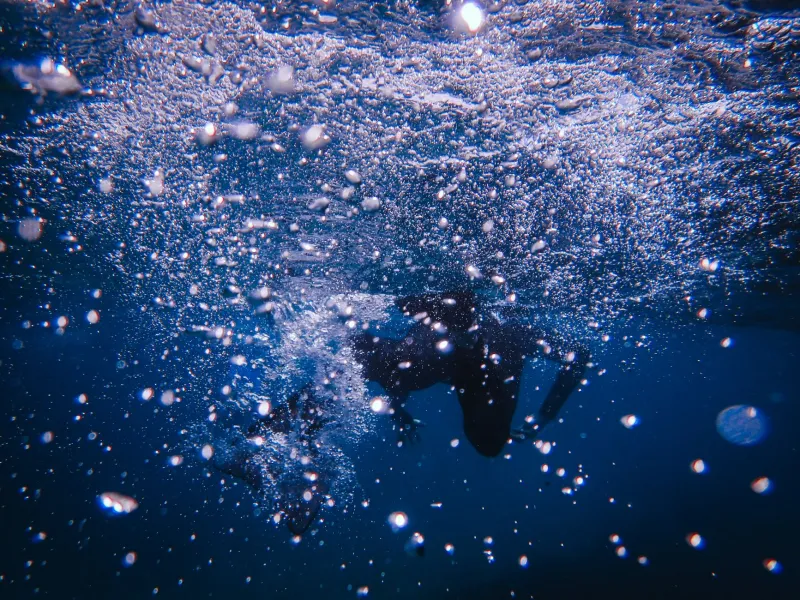
There is a particular kind of reader who finishes a work of experimental fiction and cannot, for several days, bring herself to speak in complete sentences. Not because language has abandoned her, but because complete sentences suddenly feel dishonest—too tidy, too resolved, too willing to pretend that one thing follows cleanly from another. She has been altered by the text, and the alteration is not entirely comfortable.
This is not a rare phenomenon. Among the communities gathered around small presses, literary journals, and the more adventurous corners of American reading culture, it is practically a rite of passage. You read something that undoes you. You emerge changed. You do not always emerge intact.
The question that experimental literature has long deferred—perhaps deliberately—is whether this undoing constitutes triumph or harm. Or, more precisely, whether the distinction matters at all.
The Dependency No One Names
Psychologists who study narrative transportation—the degree to which a reader becomes absorbed into a fictional world—have documented that highly immersive reading experiences can produce measurable shifts in mood, identity perception, and even physiological arousal. Most of this research concerns conventional fiction. The effects of narratives that deliberately resist resolution, fracture chronology, and weaponize ambiguity remain comparatively understudied.
What anecdotal evidence suggests, however, is striking. Readers who develop sustained relationships with experimental literature frequently describe something that resembles dependency: a growing intolerance for the satisfactions of conventional narrative, a craving for the specific cognitive disorientation that only certain texts can produce, and a corresponding sense of loss when no available book delivers that sensation.
"I tried going back to a standard literary novel after spending six months reading nothing but avant-garde work," one reader, a graduate student in Chicago, explained in an online forum dedicated to experimental fiction. "I kept waiting for it to break. I kept waiting for the floor to drop out. When it didn't, I felt cheated in a way I couldn't justify to anyone who hadn't been through the same thing."
This is the dependency that experimental fiction's advocates rarely discuss openly: not addiction to narrative pleasure, but addiction to narrative vertigo. The craving is not for comfort but for its opposite—for the particular alertness that comes from never knowing whether the ground beneath a story is solid.
When the Text Follows You Out
More acute than dependency, and considerably more disquieting, is the dissociation that some readers report in the wake of especially intense experimental works. This is not metaphorical. Several readers, when pressed, describe episodes in which the formal strategies of a text—its fragmented syntax, its collapsed temporality, its refusal to anchor perspective—seemed to leak into their perception of ordinary experience.
One reader in Portland described finishing a novel structured entirely around unreliable sensory data and spending the following week questioning the reliability of her own. "I'd be in a conversation and suddenly I wasn't sure if I was remembering what had just been said or constructing a plausible version of it," she recalled. "The book had trained me to distrust the coherence of experience, and I couldn't switch that training off."
Authors who work in this register are not always surprised by such accounts. Several, when asked, acknowledge that destabilization is not a side effect of their formal choices but a primary ambition. "If the work hasn't cost you something," one novelist whose debut was published by a Brooklyn-based independent press told us, "then it hasn't asked you to be fully present. Cost is the evidence of contact."
This framing—disorientation as proof of genuine engagement—is central to the experimental project's self-understanding. It also raises questions that the project has not fully answered.
Feature, Bug, or Something More Complicated
The debate within experimental literary communities about the ethics of aesthetic intensity is older than it appears. The avant-garde has always made demands on its audience that mainstream culture considers unreasonable. What has changed is the scale of the conversation and the candor of those willing to participate in it.
Readers who identify as devoted followers of experimental fiction increasingly speak publicly about the psychological aftermath of their reading lives—not to condemn the works that affected them, but to insist that the conversation about immersive literature include the full range of its consequences. They are not asking for warning labels. They are asking for acknowledgment.
For authors, this acknowledgment is complicated by the fact that the very qualities that produce distress in some readers are precisely the qualities that produce transformation in others. The fractured syntax that sends one reader into a dissociative episode sends another into a state of heightened perceptual clarity they describe as the most lucid experience reading has ever given them. The line between these outcomes is not always predictable, and it is not always within the author's power to draw.
"I think about my readers," the novelist mentioned above continued. "I think about what I'm asking them to do. But I also think that protecting people from difficulty is its own kind of condescension. The question is whether you're being difficult for a reason."
The Return Problem
Perhaps the most practically significant consequence of sustained experimental reading is the one least dramatic in its presentation: the simple inability to return. Readers who have spent years inside the most demanding works of American and international avant-garde fiction frequently describe conventional narrative as not merely less satisfying but actively alienating—a form of communication that now feels, to them, like a managed misrepresentation of how consciousness actually operates.
This is, in one sense, exactly what experimental literature intends. Its project has always included the reformation of readerly expectation, the slow revision of what a reader believes fiction is capable of doing. That the revision sometimes feels irreversible is perhaps its most honest advertisement.
But irreversibility carries its own weight. The reader who can no longer find pleasure in the majority of published fiction has not simply upgraded her taste. She has narrowed her world in ways that have social, emotional, and practical dimensions. Books are also how we communicate with one another, how we share experience across difference. A reader who has been remade by experimental fiction may find herself unable to inhabit the common literary ground on which many of those conversations depend.
The Cost as Credential
What is most revealing about the communities that form around experimental literature is the degree to which psychological cost has become, for many members, a marker of seriousness. To have been genuinely undone by a text is to have genuinely read it. The trauma, if that word applies, is worn with a certain pride—not masochistically, but as evidence of depth of engagement in a culture that increasingly rewards the superficial.
This is not without its dangers. Valorizing distress can make it harder to distinguish between the productive disorientation that genuine art produces and the simple suffering that no aesthetic rationale can justify. It can also create communities in which the admission of harm is read as weakness rather than honesty.
Experimental fiction's most devoted readers are, on the whole, neither victims nor zealots. They are people who have chosen a form of reading that asks more of them than most forms do, and who have discovered that the asking is not always without consequence. The literature that pulls them under is also the literature that makes them feel, perhaps for the first time, that they are genuinely submerged—that they are not observing a story from a safe distance but living inside its pressures.
Whether that submersion is worth its cost is a question each reader must answer alone. Experimental fiction, characteristically, refuses to answer it for them.